Why Oye exists
Somewhere in Amravati there is a woman with six thousand followers who can fill a shop on a Saturday afternoon. No brand has ever paid her. For most of the last decade, the industry decided she was too small to matter.
She is not too small. She is the point.
We have spent fifteen years building a version of the internet where a few hundred people speak and a billion listen, and we have called that influence. It was never the truth. The truth is that the most persuasive voice in India has always been the nearest one — the neighbour, the shopkeeper, the teacher, the farmer with a demonstration plot. What we lacked was never trust. It was a way to reach the people who hold it.
That gap was never really about talent. It was about operations. Finding one famous person in Mumbai is easy; finding four hundred trusted people across four hundred towns, briefing them in twenty languages, tracking what they did and paying every one of them on time is hard. So the industry did the easy thing for a decade, and an enormous number of people who had genuinely earned an audience were left standing outside a room they belonged in.
The cost of that exclusion is not only theirs. A single-outlet restaurant cannot buy a billboard. A shopkeeper in Kolhapur cannot afford a television campaign. For the overwhelming majority of Indian businesses, marketing has been something other people do — a service priced for someone else. Both ends of that equation were shut out at once: the small business that needed customers, and the small creator who could have brought them.
So we built the thing that was missing. Not a directory of famous people, but a system: state what should happen, in which pin code, in which language, in which week — and the platform activates the creators who already hold that audience, briefs them, tracks the work and pays them.
What we are actually trying to do
If this works, the result is bigger than a marketplace.
It is income arriving in towns where there was very little. It is a nineteen-year-old in Nagpur discovering that her phone is a livelihood and not a distraction. It is Bhojpuri, Marathi, Assamese and Tamil becoming commercially valuable rather than merely spoken. It is the single most concentrated asset of the last decade — influence — being handed back, in small pieces, to the hundreds of thousands of ordinary people who actually earned it.
And on the other side of the same transaction, it is a family business in a tier-3 town being able to advertise at all. Campaigns on our platform start at ₹3,000. That number matters more than it looks: it is the difference between marketing being a privilege and marketing being a tool.
We are a business, and that is the point
We are not a charity, and I think that is what makes this durable. Good intentions do not pay a creator on the fifteenth of the month; systems do. So we built the unglamorous parts first — contracts, invoices, TDS, weekly reporting, payouts that actually arrive. Dignity, in practice, usually looks like plumbing.
We are early, and we will get things wrong. But the direction is not in doubt. The next decade of Indian marketing will not be written by a few hundred famous people in three cities. It will be written in four hundred towns, in twenty languages, by people whose neighbours believe them.
We would like to be the reason they got paid for it.
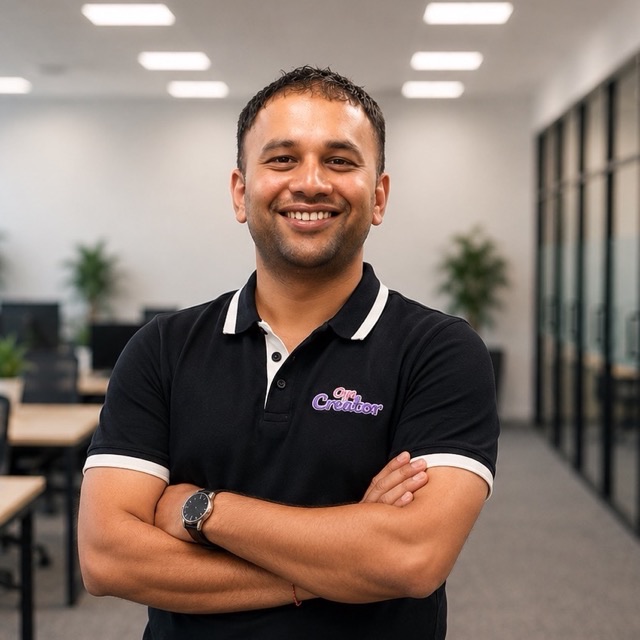
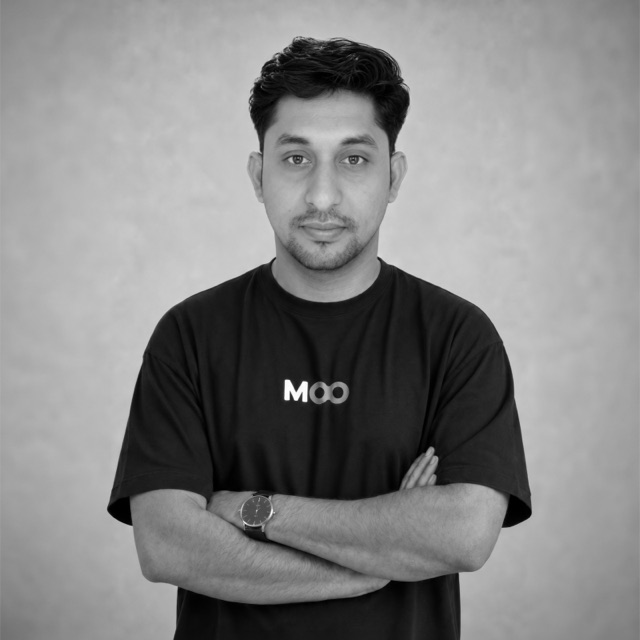
— Praddyumna Bapat, Founder & CEO
What we believe
- Trust is local. The person a buyer listens to lives a few streets away and speaks their language.
- Every category, any size. A chai stall and a national chain use the same creators and the same dashboard.
- Creators are a workforce, not an audience. Clear briefs, fair pay, tax handled — the platform’s job is to make the work reliable.
- Intent, not lists. Brands say what should happen; the platform activates the people who can make it happen.